One evening back in August, I had some fellow homeschool mothers over to make some things for our kids with felt. We had so much fun, we did it again at another mom's house a few weeks later!
My craftsmanship isn't quite where I'd like it to be....but hey - I'm okay with that. My kids love my creations. And I had a blast making them. Sewing is surprisingly therapeutic!
Felt is such a breeze to work with. It's easy to feel successful making things with felt.....even if you are craft-challenged like me.
It was wonderful to hang out with my fellow homeschool moms. My pals at Autism and Salvation and Sunrise Learning Lab were there, among others. We got lots of creative inspiration from Counting Coconuts, and we felt like this bloggy-friend was there in spirit.
I've always loved hanging out with teachers, and I especially love homeschool teachers. I learned so much at our felt parties, and I left feeling inspired and energized.
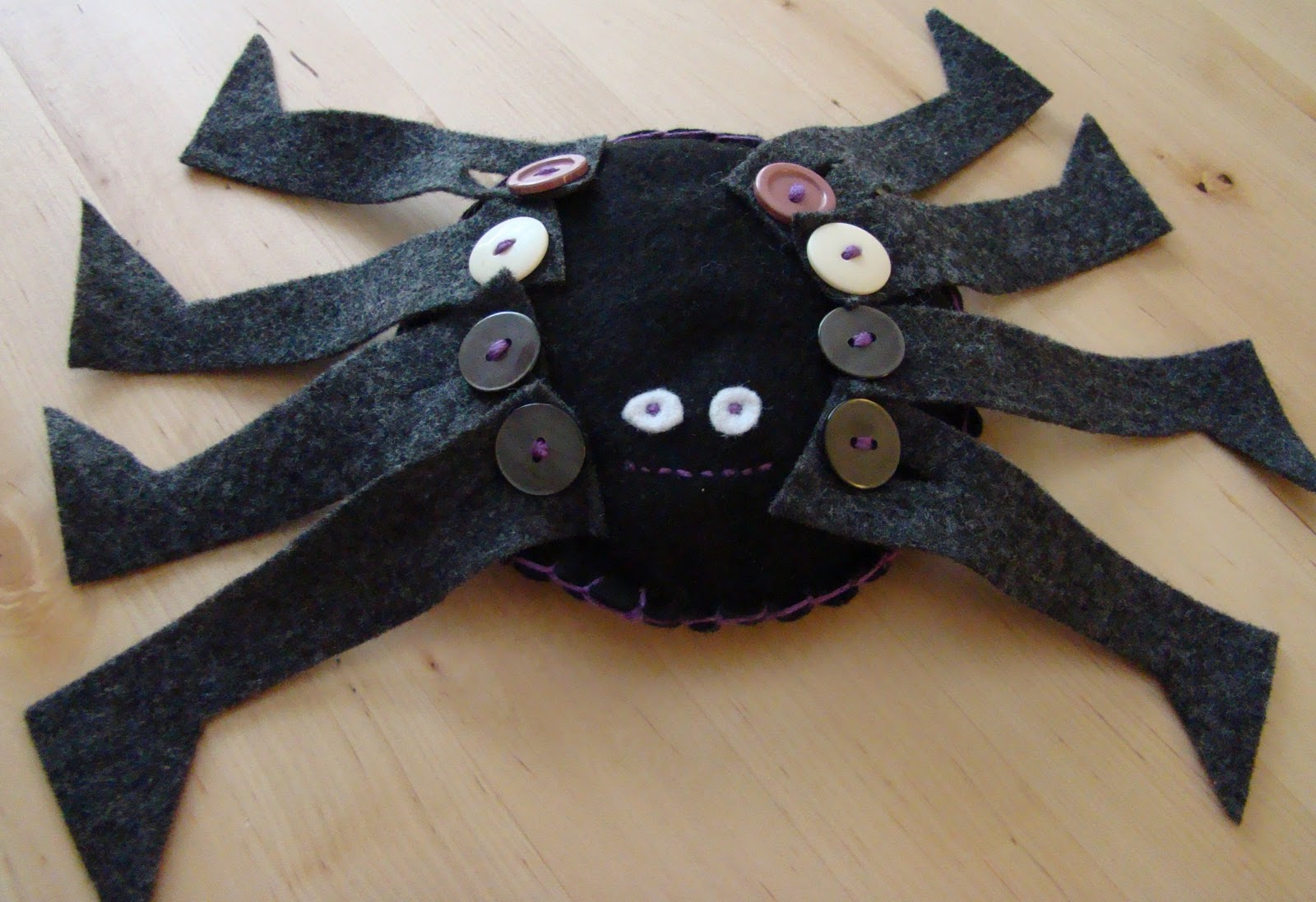
Here are some of the things I made....
The button turkey (from Counting Coconuts) and the button spider shown above are great ways for kids to learn how to button. It helps develop dexterity and fine motor strength. Plus, that little turkey face just makes my heart happy when I look at it!
Fraction circles (also from Counting Coconuts) provide a great multi-sensory way for kids to learn about fractions. I'm not crazy about how the fabric paint numbers look.
We made some very inexpensive Montessori-inspired "puzzles" using felt. I will be using these along with some three-part cards to help my kids learn about the parts of a tree, a flower, and a leaf.
On Father's Day we were lucky enough to witness this mother Florida softshell (below) turtle laying her eggs in our backyard. We did a little research and learned that the eggs take approximately nine weeks to hatch. We marked the calendar and waited patiently.
Nine weeks came and went. We thought we had either missed the big event or perhaps the eggs weren't viable. Then yesterday afternoon (at the ten week mark) we saw ten baby turtles emerge from the ground and immediately start walking to the lake behind our house. It was amazing!
We captured them so we could study them for a few minutes. Then we walked them closer to shore and released them. It was so interesting to watch their instincts guiding them. It was also interesting to notice the hawk lurking nearby.
What a wonderful experience for our family! It just goes to show that you never know what kind of wonderful natural learning opportunities are waiting for you in your own backyard.
We planted a butterfly garden in May as part of a unit on butterflies. The best part of that garden is the milkweed plant. The garden is just outside our school room window, and we often just sit and watch the butterflies float around. We've even seen them lay eggs a few times. It's awesome!
Then one day last week, we noticed the milkweed was covered in little caterpillars. They devoured the entire plant in just a couple days. We didn't want them to leave in search for food, so we ran out and bought two more milkweed plants (one of which happened to have it's own batch of baby caterpillars on it already). As the more mature caterpillars were finishing up the second plant, they slowed down, hung upside down, and formed their chrysalises. Aren't they gorgeous?
Sometime this weekend, we should see the butterflies emerge. This is the second time our boys have witnessed this process. The first time, we used caterpillars purchased from Insect Lore, which was well worth the money. However, I must say that watching it happen in nature is a bit more exciting (and certainly cheaper).
The boys have learned so much from these experiences.
I just love that look of wonder in their eyes.
I've never done a giveaway before, and I must say that it's a GREAT feeling to be able to give another mother this valuable training and curriculum. I hope it will be as beneficial for NW Homesteader as it has been for me. Well over 100 people entered the contest, which is a good indication of how highly people regard the program.
SOME OTHER STUFF
Since many of you are new to Raccoon School, I'd like to take this opportunity to say welcome and thank you for being here. One of the main reasons I write a blog is because of that wonderful sense of community I get.I sincerely thank you for being part of it!
If you're wondering who I am and what I'm all about, read this post: Meet the Raccoons
If you're wondering why I blog (or why I don't blog very often), read this post: Is Blogging Worthwhile?
If you're wondering what "sensory processing" is all about, look at this page: Sensory Processing
Thank you again for being a part of Raccoon School.
I hope to hear from you from time to time!
Little Brother loves dinosaurs. We've been having fun with this simple match-up game. In a basket, I put seven of our toy dinosaur and the corresponding flashcards ($1 from the Target). Whenever the mood strikes him, Little Brother matches up the dinosaurs with the cards.
It was really interesting to watch him race through the first five matches and then take a long pause on the last three, which looked very similar. To my amazement, he ended up getting them the all correct.
Little Brother (3) has always loved dinosaurs. Right now he's really interesting in finding differences and similarities. So this activity is a "perfect match" for him.
I've never done a giveaway before, but I have the opportunity give one of my readers a very valuable gift. I love to give people free stuff! So, here goes.
WHAT YOU WILL WIN
A free spot in the next training course through World Wide Montessori Online, which starts in September. Along with the training, you will receive 12 albums of curriculum materials (over 5,000 pages of materials)...a $240 value. This course is designed for educators, homeschoolers, or parents who are interested in learning more about Montessori methods.
HOW TO ENTER
There are five ways to enter. Do any (or all) of the following:
Then come back here and leave a comment (with your email address) telling me what you did. If you are already doing any of these things, be sure to say so in your comment. You will receive one entry for each way that you are following one of my two blogs, Raccoon School and Healthy, Green and Frugal. So, you could get as many as five chances to win!
I will randomly choose a winner on August 5, 2011. I will contact the winner directly via email. If I do not receive confirmation from that winner within 48 hours, I will randomly-choose another winner. Once I receive email confirmation, I will post the winner's name here.
MY EXPERIENCE WITH WORLD WIDE MONTESSORI
This time last year I enrolled in an online training course throughWorld Wide Montessori Online. I had recently come to the decision to homeschool. Although I was a certified public school teacher with a master's degree in elementary education, I wanted to know more about Montessori teaching methods.
I was struggling to learn as much as I could on my own. My homeschooler friend from Sunrise Learning Lab, who has a professional background in Montessori education, suggested I consider World Wide Montessori Online.
A year into my training, I'm so glad I enrolled. Although I'm far from being a full-fledged Montessori homeschooler, the knowledge I've gained from this course has revolutionized my approach to teaching and parenting.
I wasn't looking for an official Montessori certification. I just wanted help implementing Montessori methods at home. That's exactly what the course offers. Here's what I like about the course:
It's very laid back. You can do as much (or as little) as you like. All the materials and lectures are presented online, so there's no set time-frames that must be followed. You can give your attention to it when it's a good time for you.
You get a lot of curriculum materials. You get them all electronically, so you will have to decide whether you want to invest the time and resources into printing all out. Alternatively, you can just view them on your computer and print out materials as needed.
Direct instruction for me (not just the kids). The course provides lots of detailed information about the philosophies behind Montessori, and how to implement it.
Support from a Montessori-trained professional. You have easy access to the woman behind the course, Karen Tyler, AMS. She's always been very helpful to me when I have questions.
An international learning community. One of my favorite parts of the class is the opportunity to connect with fellow students from around the world. I would say most of the students are homeschoolers, and a number of them have children with sensory issues.
Let me know if you have any questions about the training or the giveaway. Good luck!!!
This is a fun activity that's inexpensive and easy to make. It's provides practice identifying subtle differences in shades of color. Plus, clothespins are great for building fine motor strength and dexterity.
Here's how I made them. It only took me about 20 minutes, and I didn't spend a cent on any new materials.
I got a few free color cards from the paint department at the home improvement store. Be sure to get two of each color.
Take one card from each pair and cut it up.
Glue the cut piece onto a clothespin (school glue worked just fine for me).
Once it's dry, it's ready for the children to make the matches.
I'm finding it's better to not overwhelm Little Brother (3) with too many colors at one time. Big Brother (5) likes the challenge of doing them all at once. He actually wants to create a color spectrum, so I will need to make a few more for him.
Thanks Jessica for this great idea!
Also, thanks Mom for picking up the color cards for me!
I have always wanted a Montessori-style continents puzzle for our classroom, but I can't stomach spending $40 or more on this one item. After many months of searching for a good deal, I gave up my shopping quest and decided to make it myself.
I am NOT a very crafty person, so this was a big undertaking for me. It's certainly not perfect, but it serves my purpose just fine.
The intention of this activity is to help my children learn the names of the seven continents and where they are positioned in relation to each other.
It only cost me $5. Here's how I did it:
Print out outlines of the continents from a website such as Owl & Mouse. I suggest choosing "World 1" at the 4x4 size. I started off trying to do each continent individually and ran into some trouble with the continents not being equally proportioned.
Cut out each continent and pin them to a sheet of felt. You could also use iron-on transfer paper.
I choose to follow the Montessori color-coding system for continents, so I bought seven different sheets in the appropriate colors (orange, brown, pink, green, red, yellow, white). Be aware that one yellow sheet is slightly too small to capture all of Asia. I pieced some of the scraps together to complete the continent. In hindsight, I wish I had just left it cut off, though.
Using a sharp pair of scissors, cut the shape of the continents out of the felt. I was worried about precision, but it really wasn't difficult. Actually, the hard part is deciding how detailed to be and how to deal with islands and such.
I printed out labels from Free Montessori for Everyone, laminated them, and hot glue-gunned them to little pieces of felt (using the Montessori color coding system).
I created a felt board by hot gluing a big piece of blue felt (about $2 at Jo-Ann Fabric & Craft) to a piece of foam board ($2.89 at Target). I can see using this felt board for other projects in the future.
I printed and colored this world map to use as a control of error. The children use it as a guide as they place the felt pieces onto the board.
I introduced this project to the boys this morning, and they've already made huge progress with the intended learning objective (something I've had a hard time getting them to focus on up until now).
Thanks to Maya, Susan, Martianne and Jennie for all your helpful advice on this!! I really appreciate it.
I follow a lot of blogs - way more than I can actually read.
Zen Habits is one blog that I read almost every day.
It makes me feel very....zen.
Zen Habits is not written by any sort of self-help expert or publishing conglomerate. It's just a guy who is all about living a simple, minimal, frugal, and peaceful life. The site itself is about as clean and uncluttered as you can imagine. There are no ads. All of the content is free of copyright.
Although the author mentions his family occasionally, that's not the focus of the blog. I was pleasantly surprised the other day when I read that he homeschools his children using the unschooling method. The post was titled, When Being Who You Are Challenges the Norm.
"My wife and I homeschool four of our kids, and that makes us weird," he said.
Indeed.
It gave me a nice feeling to know that this man, who strives for zen simplicity in much the same way I do, has made similar choices about how to educate his children.
When children read words, they may not necessarily be conceptualizing their meaning. This past week, I used a simple strategy with my boys called the Text-Picture Match. Not only did it allow me to check their comprehension, but it also helped reinforce the concept for them that they should seek meaning in the text they are reading.
Even though I feel good about our choice to homeschool, I still have a little sadness sometimes that my boys miss out on a lot of the fun social aspects of being in traditional school.
Yesterday, my boys got a chance to experience some of those simple pleasures. We had a another homeschool family over for a playdate. It just so happens, they are dealing with sensory issues as well.
It's the type of playdate I've always envisioned....we conducted science projects and looked through the microscope, we studied a snake and drew pictures, we sculpted playdough and swam in the pool, we read books and ate lunch, and we had lots of unstructured cooperative play time.
To the kids, it was all fun. To me and the other mom it was heartwarming. It was a good day, and I hope to have lots more homeschooling playdates just like this one.
As my first-born son approaches the time when he will officially start homeschooling, I figure now is a good time to set clear intentions for this journey we have begun.
For both of my children, it is my intention to.....
nurture a lifelong love of learning.
help them create a definition of success for themselves
- for both the present and future - and help them achieve it.
encourage them to reach their full potential
and always try their best in everything they do.
ensure that they are surrounded with an abundance
of resources and learning opportunities
that will help them develop their mind, body, and spirit.
create an environment that is conducive
to learning, peacefulness, and happiness.
become re-acquainted with my children
and myself each day, releasing us all from
the limitations and transgressions of the day before.
never sacrifice my relationship with my children
at the expense of education.
I love you, my sons. ♥♥
I will try my best to be the teacher you deserve.
We've had these Melissa & Doug stringing beads for many months, but they don't get played with much. At least they don't really get strung in the manner in which they are intended.
I figured out a new way to tap into the potential of this simple, yet educational toy.
I created three different patterns based on color and shape. I chose yellow, red and orange in honor of autumn.
I took a picture of each pattern I created, developed the prints, and put each print in a protective sleeve (I just cut pages out of an old photo album to get my sleeves).
Then I put the pics and the loose beads on the shelf. I tied the end of the string to one of the blocks to make sure the beads don't fall off. Notice that all the patterns end with the same bead. Perhaps a more advanced version of this could involve the child tying the string to the last bead.
Big Brother did a great job replicating the patterns! He enjoyed checking the picture to make sure his string of beads was in the correct order.
I love that I was able to bring new life to an old toy with minimal cost and effort!
This post is being shared at Childhood 101’s We Play, where the idea that play is the “work” of children and helps them to learn and make sense of the world they live in is celebrated each week.
I'm working on getting my school room organized (or trying to anyway). It's been challenging to figure out the most efficient way to store materials. So many little pieces!! Any advice?
One thing I've managed to figure out is how to tap into a free, abundant and eco-friendly supply of storage containers.
I will spare you the sappy love story between me and my husband, and how our two sons (ages 4.5 and 2.5) are the light of our lives. Bla bla bla. The important thing to know is that I have always dreamed of being the perfect mother with perfect children. In reality, perfection doesn’t exist.... in fact, it can be a dangerous concept.
That realization has helped me come to my senses.
In retrospect, my oldest son showed signs of sensory integration problems from the beginning. There was a lot of crying, sleep trouble, noise sensitivity, and bouncing. In his first sonogram picture he looks mid-jog.
At first, I just assumed all babies were like this. When I heard other parents talk about very different experiences with their infants, I started wondering what I was doing wrong. I had a gnawing feeling that something was off.
A TURNING POINT
Fast forward two years. Big brother welcomes little brother into his life with the usual mix of delight and irritation. It was a joyful time in many ways, but it was also when the darkness began to descend. It was a turning point in two respects.
First, the contrast between the two boys made it harder to brush these anomalies aside as mere “personality quirks”. Normal household sounds like the vacuum and the blender left our infant completely unaffected, while our toddler was in a heap of despair.
Second, the quirks seemed to amplify with age. They do call it the “terrible twos” for a reason, but it just seemed a bit much.
Our days went something like this.... the usual morning meltdown about coffee and Ovaltine (don’t ask), wild jumping, running, crashing into furniture, heart-stopping screeches, loud singing, and an assortment of meltdowns scattered here and there. The evening was topped off by a miserable experience called “tubby time”. Haircuts, nail clippings, and teeth brushings were train wrecks. Eating out was usually a disaster. Potty training took nine months. Anything that even looked like it might make a loud noise was a potential land mine. Plus, he was still sucking his fingers, drooling, and chewing everything in sight.
The impulsive and mischievous behavior was the most worrisome. No pile of folded laundry was left standing. No bottle of lotion was left unsplattered. No opportunity was missed to knock over his infant brother. You could be sure that if some loose article was left in his reach it would either be dumped out, knocked over, flung about wildly, thrown across the room, or put in the toilet.
At the same time he was exhibiting some amazing strengths. He was (and still is) extremely joyful, loving, funny, and social. He was very interested in the world around him and retained information with astounding ease. He had an exceptional aptitude for puzzles. His verbal skills stood out the most, though. He was singing the alphabet song around 18 months. He spoke articulately in complete sentences before he was two and started reading words not long after that. He was reciting fairly long story books and songs by memory, and building all kinds of words with his foam letters (one of his favorite toys). I was at once impressed and unsettled by all of these strengths. Was his affinity for letters bordering on obsession? Were these “splinter skills”?
It was clear to me that something was off, but what exactly was it? And how was I supposed to handle it? I was seriously floundering.
THE DEVELOPMENTAL SPECIALISTS
I scoured the internet for answers, but nothing seemed to fit. I scared myself into thinking he had all kinds of disorders. Although the pediatrician didn’t see any major cause for concern, she pointed us to a developmental specialist.
The prospect of getting some kind of “diagnosis” scared me to death. Even more frightening was the possibility that my son would be capriciously labeled with the disorder-of-the day, and it would follow him the rest of his life.
The experience with the developmental specialists was nothing like what I envisioned, but it was frightening all the same.
The doctors were very thorough and compassionate. They used an arsenal of instruments to gauge my son’s development. I will never forget the day they presented us with their detailed analysis. The tests indicated normal development (phew!). Perhaps he had some “sensory issues” as well as low muscle tone and deficits in his fine motor skills. However, the real issue was that I was worrying too much and my expectations were too high.
My mind came to a grinding halt. Basically, all I heard was, “you’re a bad mother”. I was embarrassed, confused, and distraught. It wasn’t until several months later that I felt angry as well.
Did they not understand what I was dealing with everyday? And since when is it bad to have high expectations? And see a doctor when you think there might be something wrong?
I didn’t know what to think. I was extremely relieved that he didn’t have a serious problem, but completely daunted by the prospect of getting through each day of my increasingly-frustrating life with no answers, tools, or guidance of any kind. Oh, and by the way, I was a doctor-confirmed bad mother.
If only I had had been able get over myself and HEAR the words “sensory issues” I could have started this learning process a lot sooner. Unfortunately, it just didn’t sink in. I was too busy having a pity party, and I continued to flounder.
PRESCHOOL DAZE
The doctors recommended preschool, so I enrolled him immediately. They also suggested possibly getting an evaluation by an occupational therapist. I dragged my feet on this one. The doctors were ho-hum about it. Dealing with the insurance company was a major headache. The noise sensitivity and meltdowns were fading. The impulsive and mischievous behavior was really our biggest concern, but that didn’t seem like something an occupational therapist would address. It seemed pointless.
Even so, it was all I had besides preschool, so I eventually got the evaluation scheduled. All the while I never realized how occupational therapy and learning more about sensory issues might vastly improve our lives.
The first day of school was a month shy of his fourth birthday. It was met with a great deal of fanfare. Our entire family was excited and hopeful that this could be a turning point. The school was wonderful, and overall his five month stint there was mostly full of lovely, positive experiences. However, in some respects these school days were some of the darkest I had ever experienced as a mother.
As difficult and exhausting as it was to deal with my son 24/7, sending him off to school was much worse. Spending the entire school day worrying about what might be going on. Getting the behavior report from the teacher, no matter how understanding and sympathetic she might deliver it. Apologizing to another parent for something my child has done to her child.
All of these things sent me over the edge. As a former elementary school teacher, I never dreamed my child would be a behavior problem at school. This was cognitive dissonance to an extreme degree.
It was clear that preschool was not the panacea we hoped it would be. I was at an all-time low. This is the point the anger toward the developmental specialists started to bubble up. I had left their office wondering if these problems were a figment of my imagination. Yet, his preschool teachers were having some of the same experiences. Things just weren’t adding up.
THE SUN CAME OUT
Then one day the teacher said something that jolted me to the core..... “have you ever thought about sensory issues?” It was in that moment that all the scattered pieces came together, light bulbs went off, and I finally started to GET IT.
The occupational therapy evaluation that seemed perfunctory suddenly took on a new importance. While I anxiously awaited the day of the evaluation, I searched the internet - this time in a more focused and productive way. I came across Hartley’s Life with 3 Boys and a few other other blogs about SPD. The light started to shine into my dark world.
In the three months since that day our lives have been transformed. We now meet with a fantastic occupational therapist two times a week whom my son absolutely adores. He will do anything if she asks him to. I now have a sensory diet for my son and I know how to use it. Sometimes I’m in awe of the major changes that have taken place, especially with fine motor skills. He went from not wanting to hold any sort of writing utensil to writing almost every letter of the alphabet. He now has a new way to express his love of letters and words!
His behavior has also has improved a great deal. I can now leave a pile of folded laundry on the bed without fear of getting it knocked down! Amazing!
There are still moments that are as frustrating and difficult as ever. The big difference is my level of understanding. I’m learning how to prevent problems from happening in the first place. I also have more compassion for my son and a new-found empathy for what it must be like to walk in his shoes.
THE FUTURE
Okay, we’re starting to get a handle on all this sensory stuff. So what does the future hold? I have the same sort of daydreams Steve Martin’s character had in the movie Parenthood. If you're not familiar with the movie, here's a clip:
Just like the movie, one minute, I picture my son giving his valedictorian speech, thanking his wonderful parents for helping him through the rough patch he had as a child. The next minute he's in a bell tower with a riffle. I bet all parents probably have these thoughts - SPD or not.
The optimistic side of me sees the incredible progress that has been made over the past few months and expects my son will continue to mature and develop. The family will learn to integrate these strategies naturally into our lives to the point that we won’t need to think about it anymore.
The pessimistic side of me worries that all of this - the occupational therapy, the sensory diet at home, all of it - is just barely enough to keep the problems at bay. If we stop (even for just one minute) everything will all fall apart. Even worse, I worry that as my son ages, his issues will amplify and intensify to the point that we can’t keep up. This ultimately brings me back to the bell tower scenario.
HOMESCHOOLING
One thing that really scares me is public school and how it could very well send my son marching up the stairs of that bell tower. Preschool gave me a glimpse into what life at public school would be like for my son. We were actually quite fortunate that the teachers and the director of the school were well-informed, compassionate, and handled the issues in a very positive and proactive way. I imagine this is as good as it gets. Being a former public school teacher myself, I know that it would likely be a lot worse. The school system as it exists today creates an uphill battle for any teacher, no matter how wonderful he or she might be.
So.... homeschooling. It has always been something we’ve considered - even before my children were actually born. My husband and I are both teachers. We would find a great deal of joy in educating our own children. We’ve kept an open mind and have carefully weighed all the pros and cons. Our first son is due to start Kindergarden one short year from now. No more contemplation. Time to make a final decision.
Decisiveness has never been my strong suit, but all that has unfolded over the past few months has made the answer seem crystal clear.... we are going to homeschool.
Of course we will always stay open to other possibilities, but for now I can’t imagine that any classroom teacher will be able to give Jack the sensory input he needs to stay even throughout a long school day. I can barely manage to do it myself at home with only two children! So why set us all up for failure when we don’t have to?
RAISING SENSORY SMART KIDS THE MONTESSORI WAY
There have been many times over the past few months when I had that wonderful feeling of living life on an optimum trajectory - ideas spring forth, paths emerge, and plans fall into place. This has been particularly true in the area of homeschool planning. Once we made the final decision in favor of homeschooling, a wonderful opportunity fell squarely into my lap. A fellow homeschooler recommended a great (and inexpensive) online training program that will give me the tools and guidance I need to educate my children using Montessori methods.
I have been drawn to the educational philosophies of Maria Montessori for years. I’ve been reading and experimenting for months, but I hit a brick wall. I needed a deeper understanding and a better plan.
This training program fits the bill perfectly. If it had been presented to me any sooner, I might have failed to recognize one of the most important reasons why Montessori is such a good fit for us. You guessed it.... Montessori places a strong emphasis on the senses!
The serendipity of it all is simply delicious.
SO, AM I STILL ANGRY WITH THE DEVELOPMENTAL SPECIALISTS?
Most certainly not. In hindsight, I think they gave me some solid advice. Unfortunately, good advice from well meaning individuals is not always easy to hear, and even harder to absorb. Especially when emotions are running high.
Since our first meeting nearly a year ago, I’ve reflected on what they said to me many times. As the months go by, the meaning I extract from their words morphs.
For example, I initially heard them say that I needed to lower my expectations. This is nothing short of blasphemy to a teacher. Now that I have a better understanding of why my children act the way they do, I’m able to have a more realistic expectations. It’s not a matter of letting them run around like wild monkeys. It’s more about working with them on their level of ability instead of just being frustrated when they don’t act like I think they should.
This, like so many of the things they said to me that day, just didn’t make sense to me at the time. Although I left their office feeling empty handed, there was actually a bounty of wisdom there that just took some time to reveal itself to me. I’ve tried to apply this wisdom the best way I know how. I think I’ve made great strides in terms of allowing my children to be be independent, something that flows naturally from the Montessori philosophies.
I’ve also tried to be more conscious of my anxiety level and focus more on my children’s strengths and abilities. I’ve had some HUGE revelations about what it means to accept and love my children as whole people, even when they might not behave the way I think they should. I’m sure these understandings will help me as they continue to grow and become more independent beings in this world.
One comment that has particularly stuck in my mind was, “yes, he has some unusual things going on, but isn’t that wonderful?” I’ve always thought I had a fairly progressive attitude about “special needs” children. That is until it was in relation to my child. Now the term “special needs” has a whole new connotation for me, and I see now that we all have special needs. My job as a parent is to understand what those needs are and fill them.
Something that still puzzles me about this experience is the way the doctors almost scolded me for being concerned about my child. I wonder if they thought I had Munchausen by Proxy? And while they did give me a few clues about sensory issues, why didn’t they put more emphasis on this? Perhaps recommend a book or something? Were they afraid I would be too quick to identify with the label?
I’ve tried to examine myself, and I truly do not believe I am seeking out something to be wrong with my child. I don’t wish for him to have some sort of disorder. I’m not looking for an excuse for his behavior. What I wanted then, and still want today, is a better understanding of my children so I can be a good parent to them.
Furthermore, I don’t think I’m making a mountain out of a molehill. I see very clearly that this is just a molehill. In the grand scheme of things, having sensory issues is not that big of a deal. I understand that. It’s just helpful to have the right tools for dealing with it.
Perhaps the most important lesson I took from my experience with the developmental specialists is that no one doctor (or person) has all the answers. Just like teachers, doctors are facilitators, or guides, that give me bits of information and insight that I can take (or not take) along with me on my journey. I don’t think the doctors fully understood what was going on in our life or how to fix our problems - how could they? And I should have never expected they would!
LABELS & SEMANTICS
The truth is that I am very cautious to put ANY kind of label on my son. One or both of my sons very well might meet the criteria for SPD - I honestly don’t know. But neither of them have been officially diagnosed. The pediatrician sees no need to apply such a label and I agree.
Either way, I personally resist the “disorder” aspect of SPD. For me, in this moment, “sensory processing” will remain lower case, sans “disorder”. Instead of thinking in terms of something being broken, I’d rather use all that I’ve learned about sensory processing in a constructive way to to help me know and love my sons. I want to avoid getting so swept up in a label that I loose sight of my sons as individuals. Even worse, I don’t want end up using the label as an excuse for bad behavior or bad parenting.
Through all of these experiences, I’ve developed a heightened awareness of the role the senses play in the normal development of all children. I have a new point of view when I browse through countless products in the baby section that claim to aid with sensory development.
Whether or not they actually live up to these claims is beside the point. What’s important is that I assumed all this sort of development just happened on its own. For many children, it very well might. However, if there’s something I can do to help my children along with this area of their development, why shouldn’t I? I never hesitated to help them learn how to identify shapes, sit up on their own, and take their first steps. I would have been well served - as a parent and a teacher - to have picked up on the importance of senses a lot sooner.
I feel compelled to tell all my friends who are parents or teachers about what I’ve been learning. I think we all would be better caretakers of our children if we understood what sensory processing was all about!
Case in point is our “Number 2”, as we so affectionally call our youngest son. I can’t imagine there’s anything about him that would have caused us to meet with a developmental specialist. He seems to be developing in a more typical way than his brother. Even so, it’s clear to me that he has a set of sensory issues all his own.
He is generally very relaxed and subdued (to an extreme degree at times), but he has bursts of wildness and he can be very willful and intense. Although is he is the sweetest, cuddliest child you’ll ever meet, he can be quite aggressive (often in a loving way, if that makes any sense). When he was an infant, my shoulders were covered in bruises from all his biting. He’s gone through several hitting and head-butting phases, and he will rub your ear right off your head! Sometimes he seems freakishly strong. We call him Bam Bam. He dislikes being dirty, but he rarely melts down about it. He sucks his fingers, just like his brother.
Are these sensory integration problems? It’s hard to say. I’m pretty sure these issues aren’t causing any great impediment in his life at this point, though. In any case, all the things that I have learned about sensory processing have helped me a great deal as a parent to this child. Many of the therapies I use with Number 1 are proving to be just as effective for Number 2.
WHY DID IT TAKE ME SO LONG TO GET HERE?
Now that I finally have a clue about sensory processing, I can’t help but wonder.... why did it take me so long to get to this point? Looking back, there seemed to be so many missed opportunities to learn about sensory integration and therapies that would have helped my son.
I really like my pediatrician, but I’m puzzled that she never mentioned SPD. Is it simply an awareness issue, or is SPD not considered “legitimate” by the medical community. That’s certainly been the implication in a number of documents I’ve encountered in the insurance industry.
It also seems so strange that I never honed in on SPD in all my countless internet searches about my son’s symptoms. I honestly don’t recall ever coming across SPD until I specifically looked it up by name. The only explanation that comes to mind is that SPD is so entwined with autism that I didn’t recognize it as a standalone issue.
Further confounding the problem was that I was dealing with a myriad of issues that seemed unrelated to me - noise sensitivity, meltdowns, behavior problems. I was off chasing rabbits, looking for answers in all the wrong places.
One thing I know for sure is that learning about sensory processing has helped my family tremendously. If the therapies we are using are considered “experimental” then further research is needed. If doctors and parents are not aware of the term “sensory processing” and how it impacts people’s lives, then they need to learn. I’m certainly going to do my part to spread the word. My philosophy is that everyone could stand to benefit from learning about sensory processing, SPD or not!
We usually start our school day with calendar time using this bulletin board I pieced together from materials I had when I taught fifth grade.
Here's what our calendar time entails:
Today is Friday.
Tomorrow is Saturday.
The weather is sunny.
Today is Friday, October 1, 2010.
How do you say October in Spanish? Octubre
The days of the week are....
The days of the week in Spanish are....
The season is Fall or Autumn
Calendar time has been good for us for the following reasons:
A routine for transitioning into our school day.
Practice with Spanish. I distinctly remember doing these types of recitations in my junior high Spanish class. It has stuck with me all these years.
Awareness of weather. This carries on throughout the day. We are often going back and making changes to the board as the weather changes.
Learning about days, weeks, months, and seasons.
Reading skills.
A fine-motor workout, since everything is stuck in with push pins.
Provides an opportunity to discuss upcoming plans, birthdays, and holidays.
We are also learning this little rhyme. I was shocked that my husband had never heard it before he met me. Have you heard this one?
Thirty days has September April, June and November All the rest have 31 Except February, which has 28
OTHER RESOURCES FOR CALENDAR TIME
Starfall. There's a fun calendar feature on this excellent educational website for kids.
One Lighthouse, One Moon. A lovely children's book about days, months, and seasons. Our favorite part of this book is the little lighthouse cat Nini who appears on each page. This has been a well-loved book at our house.
The Little Island. We love this book for many reasons, including the poetic way it describes the changing seasons.
Old Bear. A very simple and sweet story about a bear and the changing seasons. The illustrations are vibrant and beautiful.
Hi! My name is Rebecca. This is me, my husband, and our two raccoons (4 and 2 years old). Welcome to Raccoon School, a blog about my family's homeschool experience.
I hope you will find this blog useful (or at least entertaining). I’m certainly no expert... I’m just a mother foraging for an education that makes sense.
I also hope that you will share your ideas in the comments section or on the facebook page. I would love to hear from you! ♥
My intention is to write short, easily-digestible posts about the following topics:
Homeschooling. Let’s face it... all kids are home-schooled to some extent, right? Although there are a few issues that are unique to us full-time homeschoolers, many of the topics on this blog are relevant to all children and could apply to both a home or school environment.
Montessori. Before I had children, I taught in a typical American public elementary school. Now that I’m homeschooling, I decided I might as well learn about the teaching method I’ve always been drawn to, but never really knew much about.... Montessori. I’m currently taking an online class that will help me implement the Montessori method in a homeschool environment and I love what I’m learning!
Sensory Processing. Have you ever heard this term before? I certainly hadn’t until a few months ago when I realized my sons have a lot of symptoms associated with Sensory Processing Disorder (SPD). Each day since then I have learned something new about the critical role the senses play in early childhood development (an idea emphasized in the Montessori method, by the way). My approach to parenting and teaching has been revolutionized. In my opinion, anyone who works with children could stand to benefit from knowing more about sensory processing.
Healthy, Green & Frugal. As with everything I do, I homeschool with the goal of being healthy, green and frugal. These just so happen to be the three main topics of my other blog, Healthy, Green & Frugal.
If these topics interest you, and you'd like to keep up-to-date with what's going on at Raccoon School, subscribe using one of these methods:
Facebook.Select the "Like" button on the Raccoon School fan page to receive posts on your Facebook wall.
Feed. Subscribe to Raccoon School feed via your favorite web portal or news reader.



 . A lovely children's book about days, months, and seasons. Our favorite part of this book is the little lighthouse cat Nini who appears on each page. This has been a well-loved book at our house.
  . A very simple and sweet story about a bear and the changing seasons. The illustrations are vibrant and beautiful.


